How to Interpret a Plagiarism Similarity Report
Review four common match types, repair missing attribution, and document what you changed before submitting.
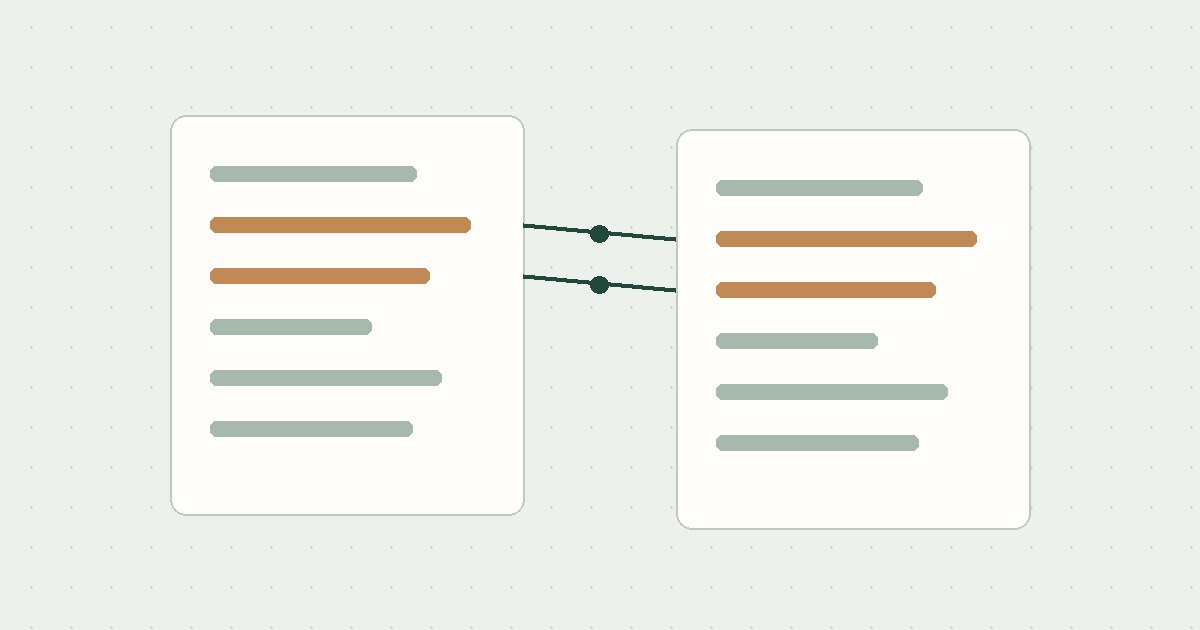
Review the matches before reading the total score
Start with a long match in a paragraph that carries a claim or interpretation. Open the matched source. Read the surrounding text in your draft and the source, then identify what they share: the words, the idea, or both. Turnitin’s similarity-score guide illustrates why the same percentage can arise from different situations, including earlier submissions of a draft. Your course or journal decides how a report is used.
| What matched? | What to check | What to do |
|---|---|---|
| Reference entry | Does it appear only in the bibliography? | Keep the accurate reference and check the report settings if you are comparing scores. |
| Direct quotation | Are the quotation boundaries and attribution clear? | Add quotation formatting and any required locator. Preserve the source wording. |
| Source language in a paraphrase | Does your sentence follow the original wording or structure? | Explain the idea from your notes and keep the citation. Quote distinctive phrasing if needed. |
| An earlier draft | Does the source record point to your own work? | Confirm the version and ask the instructor or editor how it should be handled under their policy. |
Repair a close paraphrase without changing the finding
Fictional source: “Participants completed a short recall task one week after the workshop, and the comparison group received no reminder.”
Close draft: “Participants finished a brief recall exercise a week after the workshop, and the comparison group got no reminder.” The vocabulary changes leave the sentence structure and sequence intact. A source citation would credit the idea, while the borrowed expression still needs attention.
Revision for a methods comparison: “The study assessed recall seven days after training. Its comparison group served as the no-reminder condition (Author, year).” This version answers a specific question about the study design and preserves the timing and comparison. The citation is a placeholder for the fictional source. The Office of Research Integrity’s guidance explains how to restate ideas in your own words and structure while retaining proper credit.
Read the report alongside the document
- Keep the original report and note which check or settings produced it.
- Label each meaningful match as a quotation, routine overlap, attributed paraphrase, or passage needing review.
- Open the source for passages that need review. Check that your wording preserves the population, result, and qualifications.
- After editing, verify the citation and read the paragraph in context. Mark any unresolved entries separately.
In AI Writer, use the plagiarism tools to inspect a selected passage or review a document. If the report draws from different sources or a separate reference comparison, review the matches in their own context before deciding what to change.
Keep a short record of the decisions
Write a short entry for any match a coauthor might question. For example: “Methods, paragraph 2. Added a citation and rewrote the description of the comparison group. The timing is unchanged.” Keep necessary quotations and discipline-specific terms. Follow any institutional threshold, then use the source comparison to decide whether the writing and attribution are ready.
AI Writer
Open AI Writer to compare a matched passage with its source.